



Calgary homeowners spend a lot of time preparing for winter.
They check the furnace. They clear the gutters. They look for frozen pipes and roof problems.
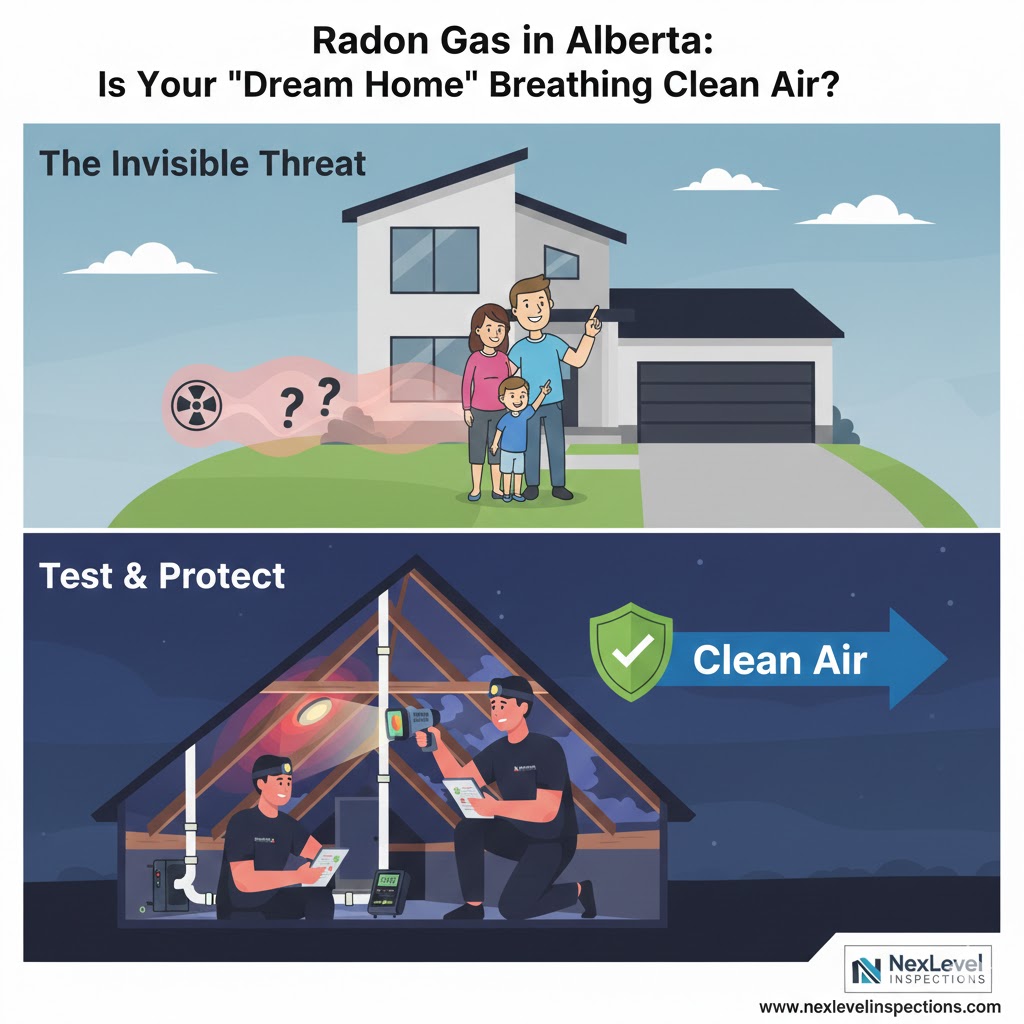
There is another home concern that often gets less attention: radon gas.
Radon is a gas that comes from the soil and rock below a home. You cannot see it, smell it, or taste it. Testing is the only way to know the radon level inside your home.
Winter is also a good time to start a long-term radon test. Health Canada recommends long-term testing, with at least 91 days of the test taking place during the heating season.
For Calgary homeowners, this makes winter a useful time to start testing.
What Is Radon?
Radon is a natural radioactive gas.
It forms in soil and rock. The gas can move through the ground and enter a home through small openings.
Common entry points can include:
- Cracks in floors
- Gaps around pipes
- Floor drains
- Foundation joints
- Sump pits
- Openings around utility lines
A home does not need to have a visible problem for radon to enter.
Your basement may look clean and dry. You could still have a high radon level.
That is why testing matters.
Health Canada uses 200 Bq/m³ as the Canadian guideline for the average annual radon level in a home.
Why Test for Radon in Winter?
Calgary homes stay closed during much of the winter.
Windows and doors remain shut more often. Heating systems also run on a regular basis.
These conditions make the heating season an important part of long-term radon testing.
Health Canada recommends that a long-term test run for at least 91 days. At least 91 days should occur during the heating season.
A test started during winter can therefore help you learn more about your home’s radon level.
How Long Does Radon Testing Take?
A long-term radon test takes at least 91 days.
Short tests may show a radon reading. However, radon levels can change from day to day.
Weather, ventilation, and changes inside the home can affect the level.
A longer test gives a better picture of the home’s average radon level.
Health Canada recommends testing for three to twelve months when estimating the average annual radon level.
For homeowners, a long-term test is a better choice when the goal is to understand the home’s normal radon exposure.
Where Should You Test for Radon?
The best testing location depends on how your home is used.
Health Canada recommends testing the lowest level where people spend more than four hours each day.
That area could be:
- A basement bedroom
- A basement family room
- A home office
- A main-floor living room
- Another regular living area
The test device should stay in the same place during the test.
Avoid moving it from room to room.
Can a Home Inspection Find Radon?
A standard home inspection and radon test are not the same thing.
A home inspection looks at visible and accessible parts of a property.
Radon needs a separate test.
NexLevel Home Inspections offers radon gas testing as part of its inspection and testing services. The company also offers home inspections, thermal imaging, air quality testing, water testing, and carbon monoxide testing.
Adding radon testing can give homeowners information that a visual inspection cannot provide.
Should You Test a New Calgary Home?
Yes.
A new home can still have radon.
The age of a house does not tell you the radon level inside it.
New construction also does not remove the need for testing.
Health Canada recommends testing new homes during their first heating season after occupancy.
The best way to know the level is simple: test the home.
Does a Finished Basement Need Radon Testing?
A finished basement can be an important area to test.
Many Calgary homeowners use their basements as living space. Some have bedrooms, offices, family rooms, or play areas downstairs.
People may spend several hours in these rooms each day.
A finished basement should not be assumed to have a low radon level.
Testing gives you a clear answer.
What If Your Radon Level Is Above 200 Bq/m³?
Do not ignore a high long-term result.
Health Canada recommends taking action when the average annual radon level is above 200 Bq/m³.
The next step is to speak with a qualified radon professional. A mitigation plan can then be chosen for the home.
The right solution depends on the building and the source of the radon.
A short test should not be treated as the same as a long-term test.
The test length matters when you review the result.
What If Your Radon Level Is Below 200 Bq/m³?
A result below the Canadian guideline is a good sign.
Still, radon levels can change over time.
You may want to test again after major changes to the home.
Examples include:
- Basement renovations
- Major energy upgrades
- Changes to the foundation
- Excavation near the home
- Changes to basement use
For example, a basement used only for storage may later become a bedroom.
A new test can help you understand the indoor environment after such changes.
Can Homes Without Basements Have Radon?
Yes.
Radon testing is not only for homes with basements.
Homes without basements can also have radon.
Health Canada recommends testing homes even when the living area is above ground.
The testing location should match the normal use of the home.
Common Radon Testing Mistakes
Testing for Only a Few Days
A short test may not show the home’s long-term average.
For a long-term measurement, Health Canada recommends at least 91 days.
Moving the Test Device
Keep the test device in its chosen location.
Moving it can affect the test results.
Waiting for a Visible Problem
Radon does not create an obvious warning sign.
You may not see a crack or water stain.
A clean basement can still have elevated radon.
Testing is the only way to measure the level.
Assuming a New Home Is Safe
New construction does not guarantee a low radon level.
Testing remains important for new homes.
Ignoring a High Result
A high long-term result deserves attention.
Speak with a qualified radon professional about the next steps.
Radon Testing When Buying a Calgary Home
Home buyers should also think about radon.
A home inspection can find many visible and accessible problems. Radon testing provides different information.
Ask the seller whether the home has a recent long-term radon result.
If there is no reliable test, consider arranging one.
A long-term test can take several months. Buyers should discuss testing options early when planning a home purchase.
Why Start Radon Testing This Winter?
Winter is a practical time to start a long-term test.
Calgary homes spend much of the season in heating mode. Doors and windows also stay closed more often.
A test started during the heating season can capture an important part of the year.
Health Canada recommends at least 91 days of testing during the heating season.
That gives Calgary homeowners a good reason to start sooner rather than later.
Final Thoughts
Radon is an invisible home concern.
You cannot smell it.
You cannot see it.
You cannot judge the level by looking at your basement.
A proper test gives you useful information about your home.
If you live in Calgary or a nearby community, consider radon testing as part of your home care plan.
NexLevel Home Inspections provides radon gas testing along with home inspection and other property testing services.
Contact NexLevel Home Inspections
Phone: (403) 633-6616
Alternate: (587) 830-0840
Email: nexlevelinspections@gmail.com
Website: www.nexlevelinspections.com
Service Areas: Calgary, Cochrane, Airdrie, Chestermere, Conrich, Okotoks, High River
Frequently Asked Questions
How long should a radon test run in Calgary?
A long-term radon test should run for at least 91 days. Health Canada recommends having at least 91 days of the test take place during the heating season.
Is winter a good time to test for radon?
Yes. Winter is a useful time to start a long-term test because it is part of the heating season.
What is the Canadian radon guideline?
The Canadian guideline is 200 Bq/m³ for the average annual radon level in a normal occupancy area.
Can a home inspection detect radon?
A visual home inspection cannot measure radon. Radon requires a dedicated test.
Should a new Calgary home be tested for radon?
Yes. New homes can have radon. Health Canada recommends testing new homes during their first heating season after occupancy.
What should I do if my radon result is above 200 Bq/m³?
Talk with a qualified radon professional about mitigation. Health Canada recommends taking action when the average annual radon level is above 200 Bq/m³.
Does a finished basement need radon testing?
Yes. If people spend regular time in the basement, testing can help you understand the radon level in that living area.
Contact NexLevel Home Inspections
Concerned about radon in your Calgary home?
Contact NexLevel Home Inspections to discuss radon gas testing and your home’s indoor environment.
(403) 633-6616 | (587) 830-0840
nexlevelinspections@gmail.com





Leave a Reply