


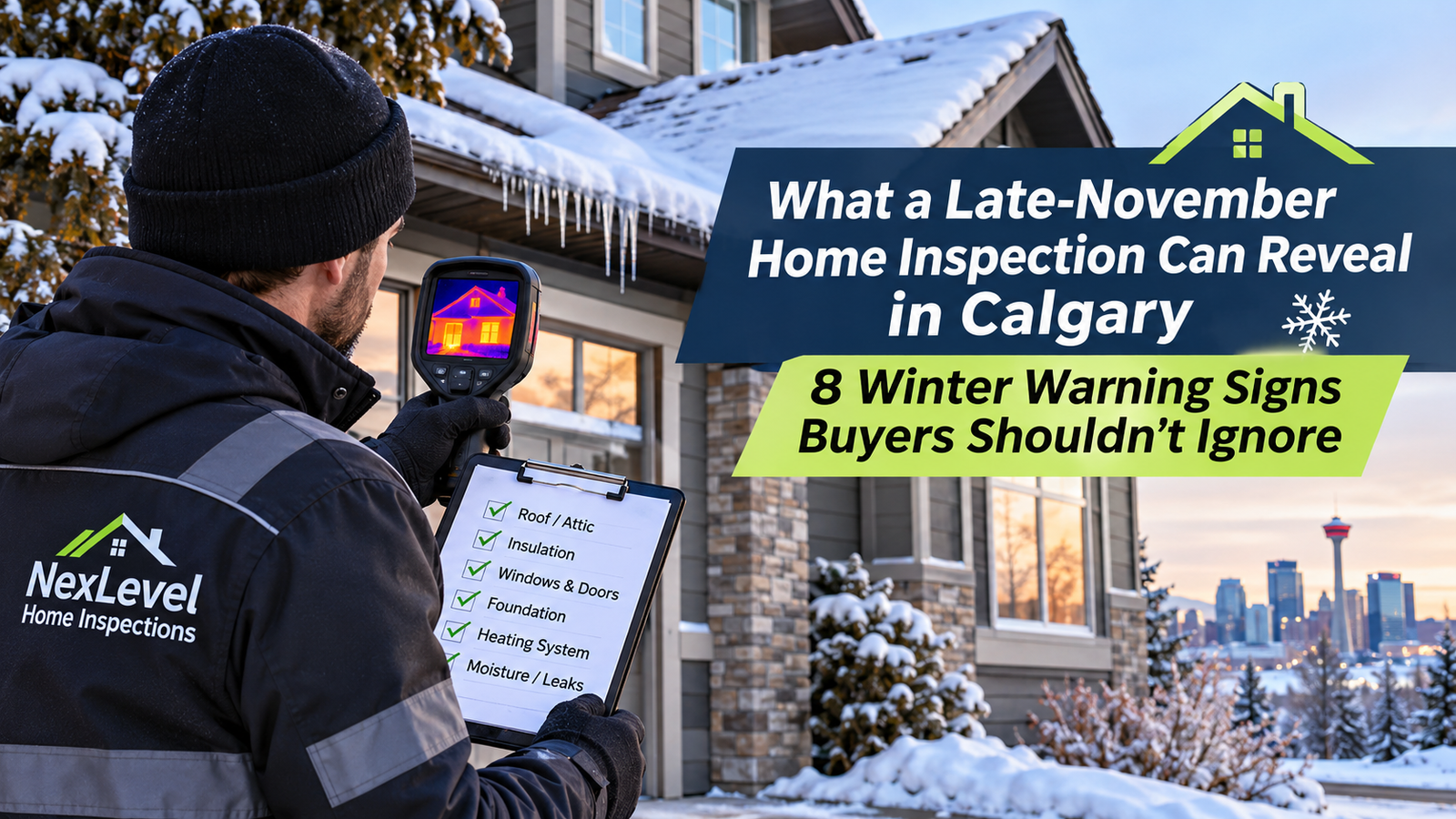
What a Late-November Home Inspection Can Reveal in Calgary: 8 Winter Warning Signs Buyers Shouldn’t Ignore
Late November is an interesting time to inspect a home in Calgary.
The leaves are gone, temperatures are dropping, snow may already be covering parts of the property, and the first serious freeze-thaw cycles of the season can expose weaknesses that were easy to overlook during summer.
For a home buyer, that matters.
A house can look warm, clean, and comfortable from the inside while still having problems with its roof, attic, foundation, drainage, insulation, windows, or heating systems.
The good news is that winter conditions do not automatically make a home inspection impossible. In many cases, they can actually provide useful clues about how a property performs under cold-weather stress.
Here are eight warning signs worth paying attention to during a late-fall or early-winter home inspection in Calgary.
1. Frost or Moisture Around the Attic
The attic is one of the first places where temperature differences can reveal problems.
Warm indoor air can migrate into the attic through gaps around penetrations, fixtures, hatches, ducts, and other openings. If moisture accumulates and temperatures fall below freezing, frost can develop.
Over time, repeated moisture and condensation can contribute to damaged insulation, deteriorated wood components, and other moisture-related problems.
The City of Calgary recommends checking attics for warm-air penetrations and gaps in insulation as part of winter home maintenance.
During an inspection, don’t simply ask whether there is “enough insulation.”
Ask whether the attic shows evidence of moisture movement, ventilation problems, or air leakage.
2. Water Staining Around Ceilings and Exterior Walls
A small stain may look cosmetic.
It isn’t always.
Water marks around ceilings, upper-floor walls, window openings, or exterior-facing areas can indicate previous or ongoing moisture intrusion.
In late fall, some roof and exterior defects become more difficult to evaluate visually because snow can cover portions of the roof.
That makes interior evidence especially important.
Look for:
- Discolored drywall
- Bubbling or damaged paint
- Soft areas
- Staining around ceiling penetrations
- Musty smells
- Signs of previous repairs
- Moisture around window openings
A professional inspection can help determine whether these observations deserve further investigation.
3. Ice Buildup and Unusual Icicles
Icicles may look like a normal part of a Calgary winter, but unusually persistent ice buildup can deserve attention.
The City of Calgary notes that icicles along roof edges can indicate vulnerability to ice damming and recommends attention to attic insulation, ventilation, and gutters.
Ice damming can become particularly concerning when melting snow cannot drain properly from the roof.
A buyer should therefore pay attention to:
- Heavy ice accumulation
- Repeated water staining
- Blocked or poorly draining gutters
- Poor attic ventilation
- Uneven roof-edge conditions
The presence of ice does not automatically mean a roof is defective. It is a clue that deserves context.
4. Foundation Cracks That Become More Noticeable
Calgary homes experience significant seasonal temperature changes.
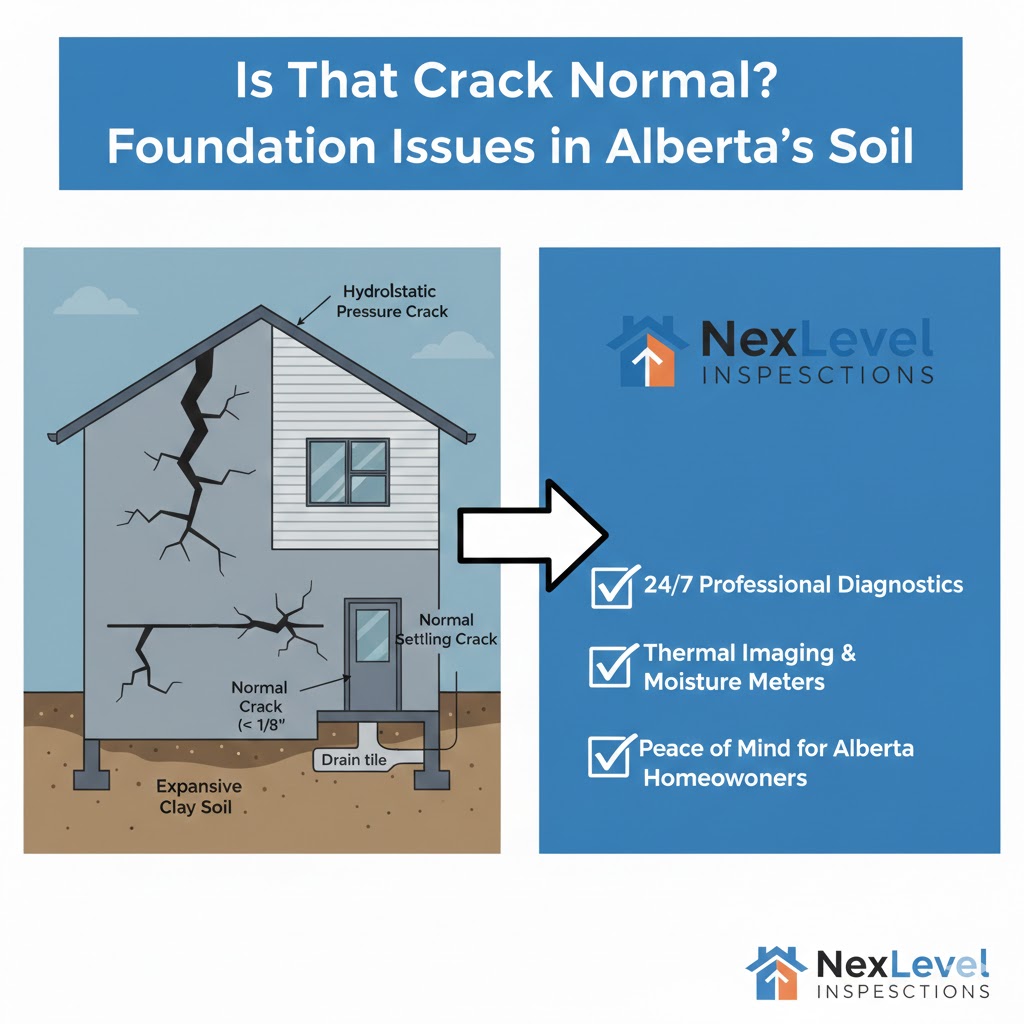
Freeze-thaw conditions can put stress on exterior surfaces, drainage systems, and foundations. Older properties may require particularly careful examination because their previous repairs, drainage arrangements, and waterproofing systems can vary considerably.
Inside the basement, look for:
- Horizontal or stair-step cracking
- Repaired cracks
- Damp areas
- Efflorescence
- Water staining
- Gaps around penetrations
- Doors or windows that appear difficult to operate
Not every crack represents a structural emergency.
The important question is whether there are additional signs suggesting movement, water entry, or deterioration.
5. A Basement That Smells “Different”
Your nose can sometimes notice what your eyes cannot.
A basement with a persistent musty smell may deserve further investigation, particularly when the space has limited ventilation or a history of moisture.
That does not mean a smell automatically proves mold or water intrusion.
Instead, it is a reason to investigate possible moisture sources.
Look around:
- Foundation walls
- Window wells
- Mechanical rooms
- Floor drains
- Plumbing penetrations
- Finished basement walls
- Areas behind stored items where accessible
NexLevel also offers air-quality testing, which can be useful when indoor environmental concerns require testing beyond a standard visual inspection.
6. Drafts Around Windows and Doors
A cold draft is more than a comfort issue.
It can point toward deficiencies in weatherstripping, seals, installation, or the home’s overall envelope.
During colder weather, temperature differences can make some air-leakage problems easier to identify.
Pay attention to:
- Cold spots near windows
- Drafts around exterior doors
- Condensation
- Damaged seals
- Gaps around frames
- Rooms that feel substantially colder than adjacent spaces
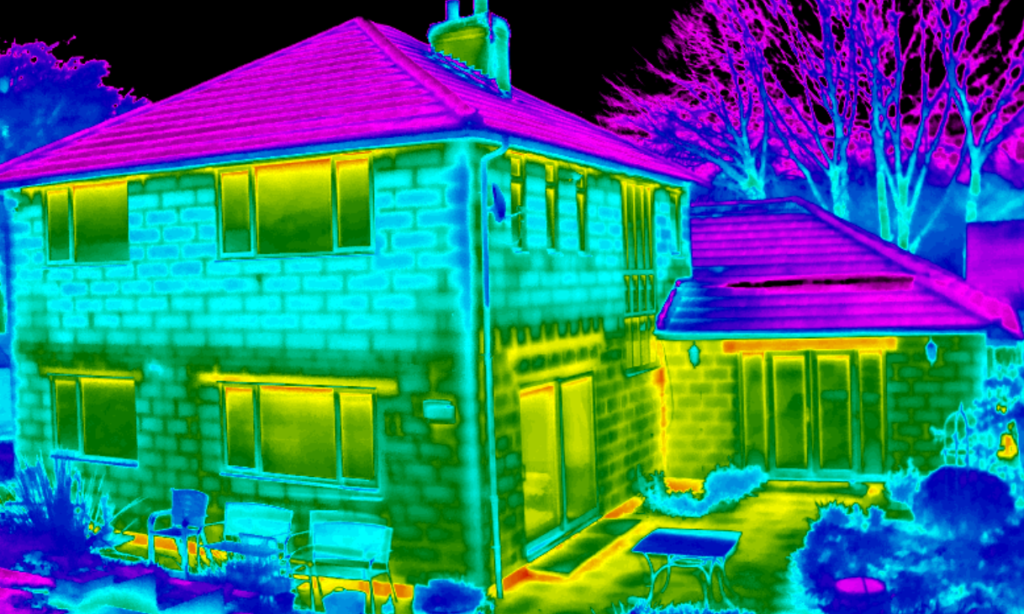
NexLevel offers thermal imaging as part of its inspection-related services. Thermal imaging can help identify temperature differences that are difficult to evaluate with a normal visual inspection alone.
Thermal imaging is not a substitute for professional interpretation, but it can provide another layer of information.
7. Roof Problems Hidden Beneath Snow
Snow creates a unique inspection challenge.
A roof covered by snow cannot always be evaluated in exactly the same way as a clear roof. Some roofing materials, flashing, penetrations, or surface defects may be obscured.
That does not mean a winter inspection has no value.
Instead, the inspector can consider the evidence that remains accessible, including:
- Attic conditions
- Interior ceiling stains
- Visible roof areas
- Flashing where accessible
- Gutters and downspouts
- Roof drainage
- Previous repair areas
- Signs of moisture intrusion
For buyers, the key is understanding what was observable on inspection day and what could not be evaluated because of conditions.
That distinction is important when making a property decision.
8. Heating and Mechanical Systems Working Harder Than Expected
Cold weather gives a home inspector an opportunity to observe the heating system while it is actually being used.
Pay attention to:
- Furnace operation
- Unusual noises
- Temperature differences between rooms
- Blocked vents
- Damaged ductwork
- Poor airflow
- Combustion-related concerns
- Accessible mechanical components
A home inspection is not the same as a specialized furnace service, electrical certification, or engineering assessment.
If an inspector identifies a significant concern, additional evaluation by an appropriately qualified professional may be recommended.
That is exactly what a good inspection should do: identify potential problems early enough for the right specialist to investigate them.
Why Winter Conditions Can Actually Help a Home Inspection
Home buyers sometimes assume that an inspection is most useful in perfect weather.
Not necessarily.
Cold temperatures, snow, frost, and heating demand can create observable conditions that tell an inspector more about how a home behaves under stress.
For example, winter conditions can make certain temperature differences, drafts, moisture symptoms, and heating issues easier to notice.
At the same time, snow and ice can hide portions of the exterior.
That means a winter inspection requires context, not simply a checklist.
A professional inspector should explain both what was observed and any areas that could not be fully evaluated because of seasonal conditions.
What Buyers Should Ask Before Booking a Winter Inspection
If you’re buying a Calgary property in late fall or winter, ask your inspector:
1. What areas will be inaccessible because of snow or ice?
This helps you understand the inspection’s limitations before you proceed.
2. Do you use thermal imaging?
Thermal imaging may provide useful information about temperature differences, insulation patterns, and potential areas requiring additional investigation.
3. Will you inspect the attic?
The attic can provide important clues about insulation, ventilation, moisture, and air leakage.
4. Will you look for signs of previous water intrusion?
A current leak isn’t the only concern. Previous staining, repairs, or moisture-related deterioration can also be important.
5. What should I have investigated by a specialist?
A good inspection does not attempt to replace every specialized trade. It should help you understand when further evaluation is appropriate.
Don’t Let Snow Create a False Sense of Security
Fresh snow can make almost any property look attractive.
It covers imperfections, softens landscaping, and creates a clean winter appearance.
But a home is still a complex system underneath the surface.
Roofing, drainage, insulation, ventilation, plumbing, heating, foundations, windows, and the building envelope continue working regardless of how attractive the property looks from the street.
For buyers, this is why a professional inspection remains an important part of due diligence.
For homeowners, seasonal inspections can help identify problems before a small moisture issue becomes a major repair.
And for sellers, identifying defects early gives you an opportunity to understand and address them before they become surprises during a transaction.
When Should You Book a Calgary Home Inspection?
If you’re buying a home, the best time to arrange the inspection is during your condition period and early enough to give you time to understand the report and make informed decisions.
If you’re already a homeowner, consider an inspection when you notice:
- New cracks
- Water stains
- Persistent basement moisture
- Unexplained drafts
- Unusual attic conditions
- Roof leaks
- Heating problems
- Recurring ice buildup
- Significant changes after a freeze-thaw event
The goal isn’t to find something wrong with every house.
The goal is to understand the property’s condition clearly enough to make a sensible decision.
Final Takeaway
A late-November home inspection in Calgary is not simply about checking boxes.
It’s about understanding how a property is responding to the beginning of winter.
Snow may hide parts of a roof. Cold temperatures may reveal drafts. Heating systems are under greater demand. Attics and basements can provide important moisture clues. Freeze-thaw conditions can expose weaknesses that were less obvious during warmer months.
If you’re buying a home in Calgary, Airdrie, Cochrane, Chestermere, Conrich, Okotoks, or High River, a professional inspection can give you a clearer picture of the property before you commit to it.
When seasonal conditions make certain areas difficult to evaluate, your inspector should explain those limitations rather than pretending every component was fully visible.
That combination of thorough inspection, clear reporting, and honest communication is what turns a home inspection into useful decision-making information.
FAQ
Can you get a home inspection in Calgary during winter?
Yes. Winter conditions can create some inspection limitations, particularly where snow or ice prevents direct examination of exterior components. However, interior systems, accessible areas, attic conditions, heating systems, moisture indicators, and other components can still provide valuable information.
Is a winter home inspection worth it?
Yes, particularly for buyers who need to understand a property’s condition during cold-weather conditions. Winter can make certain drafts, temperature differences, moisture symptoms, and heating issues more apparent.
Can snow hide roof problems during a home inspection?
Yes. Snow and ice can obscure portions of the roof surface. A professional inspector should clearly identify areas that could not be fully evaluated and use accessible evidence, such as attic and interior observations, where appropriate.
What should I look for in a Calgary home during late fall?
Pay attention to moisture stains, basement dampness, attic frost or moisture, unusual ice buildup, foundation cracks, drafts around windows and doors, heating-system performance, and signs of roof or drainage problems.
Does NexLevel Home Inspections offer thermal imaging?
Yes. Thermal imaging is listed among NexLevel’s inspection services and is used to identify temperature variations that may provide additional information about insulation, energy efficiency, and potential hidden issues. nexlevelinspections.com
Which areas does NexLevel Home Inspections serve?
NexLevel lists Calgary, Cochrane, Airdrie, Chestermere, Conrich, Okotoks, and High River among its service areas.
Buying or maintaining a home in Calgary this winter? Don’t let snow hide the warning signs.
NexLevel Home Inspections provides professional home inspection services designed to give homeowners and buyers a clearer understanding of their property’s condition.
Call (403) 633-6616 or (587) 830-0840, or visit NexLevel Home Inspections to learn more or book an inspection. The company information supplied for NexLevel also confirms these phone numbers and its Calgary service area. Nexlevel-Home-Inspections-Canada
These are verified existing NexLevel pages and are recommended as contextual links:
- Residential Home Inspection — use when discussing the overall inspection process. Residential Home Inspection page
URL needs verification for the exact service-page permalink. - Roof and Attic Inspection — strong contextual link from the attic and roof sections. The service is listed in NexLevel’s navigation. nexlevelinspections.com
URL needs verification for the exact permalink. - Thermal Imaging Service — use from the sections discussing drafts and temperature differences. nexlevelinspections.com
URL needs verification for the exact permalink. - Pre-Winter Home Inspection: Preventing Frozen Pipes and Ice Dams — useful supporting article for readers wanting more winter-preparation information. Pre-Winter Home Inspection article
- The Cleanest Basements Often Have the Worst Foundation Secrets — excellent contextual link from the basement/foundation section. Basement Foundation Secrets article
- The Hidden Threat Above: Why Calgary’s Winters Demand an Attic Inspection — relevant supporting resource, although the article should use it carefully because the new post is intentionally differentiated from it. Calgary Attic Inspection article









Leave a Reply