



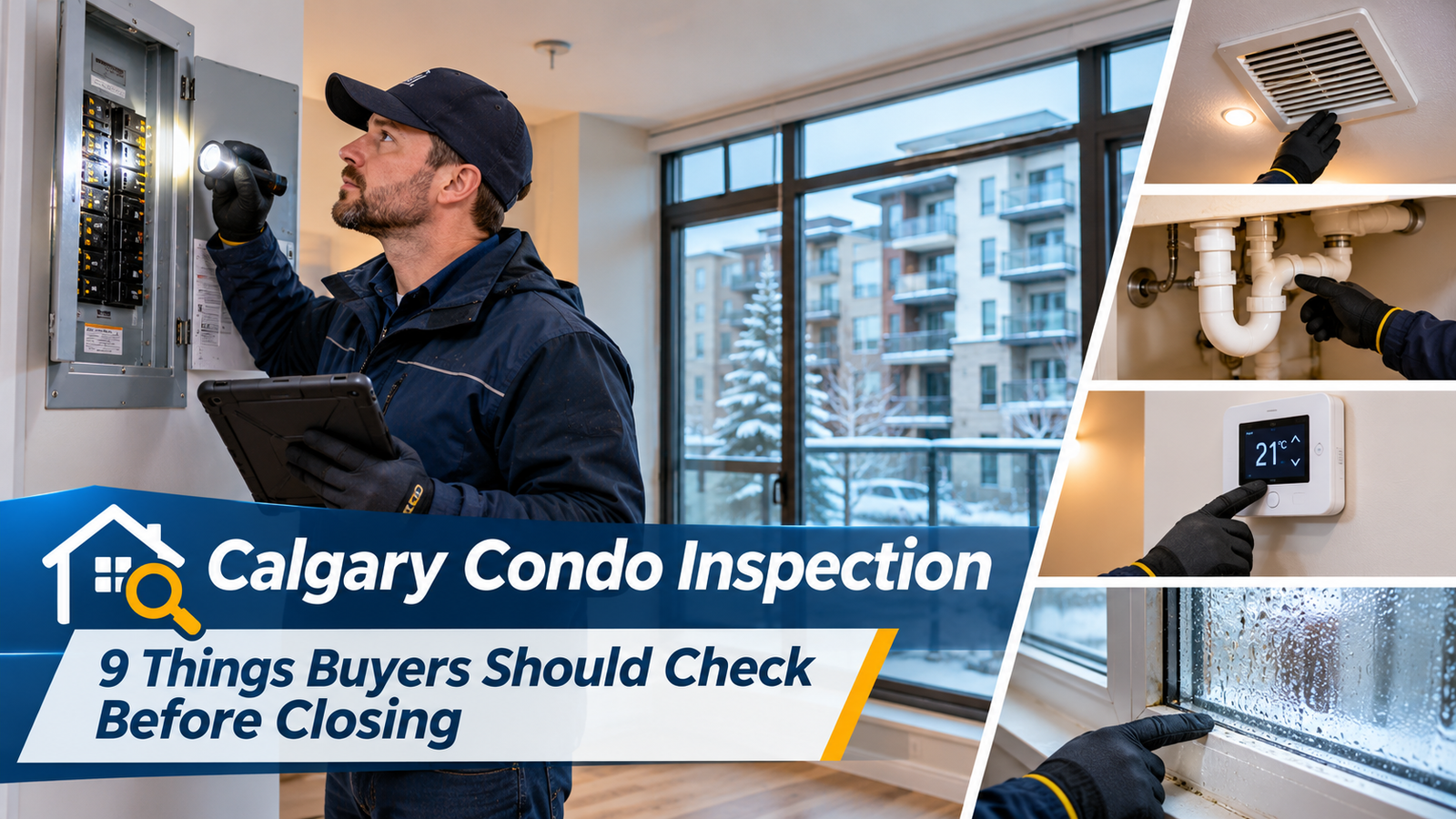
Buying a condo in Calgary can feel easier than buying a detached house. The property may have less exterior maintenance, fewer systems to manage, and a simpler layout.
That does not mean a condo is free from problems.
Inside the unit, buyers can still find electrical issues, plumbing leaks, moisture, ventilation problems, damaged windows, heating concerns, and signs of poor maintenance. Some problems may look small at first but become expensive after possession.
A professional Calgary condo inspection gives buyers an independent look at the condition of the unit before they complete the purchase.
Here are nine important areas to check before closing.
1. Check the Electrical System
Electrical problems can hide behind walls, cabinets, and finished surfaces.
During a condo inspection, an inspector can look at the electrical panel, visible wiring, outlets, switches, fixtures, and other accessible components.
Pay attention to signs such as:
- Damaged outlets
- Loose switches
- Missing covers
- Overloaded electrical panels
- Improper wiring
- Warm or discoloured outlets
- DIY electrical work
- Missing or damaged breakers
A condo may look completely modern while still having electrical concerns that deserve attention.
Buyers should also ask whether the unit has enough electrical capacity for their intended use. Someone planning to add appliances, office equipment, or other high-load devices may need to understand the existing setup before making changes.
2. Look Closely at Plumbing
Plumbing problems can cause damage long before a major leak becomes obvious.
Start under sinks and around visible supply lines. Check bathroom fixtures, toilets, tubs, showers, laundry connections, and other accessible plumbing components.
An inspector can look for:
- Active leaks
- Water staining
- Corrosion
- Damaged supply lines
- Poor drainage
- Loose connections
- Signs of previous repairs
- Moisture around cabinets
A slow leak under a kitchen sink may seem minor. Over time, however, repeated moisture can damage cabinets, flooring, walls, and nearby materials.
The same principle applies to bathrooms. Fresh caulking or paint should not automatically reassure a buyer if other signs point to previous moisture.
3. Inspect Windows and Exterior Doors
Windows play an important role in comfort and energy use.
Calgary’s cold winters make window condition especially important. Look for condensation, damaged seals, cracked glass, deteriorated frames, difficult operation, and drafts.
A window that does not close properly can allow cold air into the unit. Moisture around the frame can also signal a problem that deserves further investigation.
Exterior doors need attention as well.
Check the weatherstripping, locks, frames, thresholds, and visible gaps. A poorly sealed door can create drafts and make the room near the entrance uncomfortable during cold weather.
4. Check Heating and Ventilation
A comfortable condo depends on more than the thermostat.
The inspection should consider accessible heating equipment and ventilation components appropriate to the unit.
Look at:
- Thermostat operation
- Heating performance
- Accessible vents
- Airflow
- Bathroom exhaust fans
- Kitchen ventilation
- Visible ductwork
- Unusual noises
- Signs of moisture
Bathroom fans deserve particular attention.
Poor ventilation can allow moisture to build up after showers. Over time, that moisture can contribute to staining, condensation, and other problems.
A fan that runs but moves very little air may need attention even if it appears to work normally.
5. Watch for Moisture and Water Damage
Moisture is one of the most important things for condo buyers to investigate.
Water can come from plumbing, windows, exterior walls, roofs above the unit, neighbouring units, or building systems. The source may not always sit directly beside the visible stain.
Look for:
- Ceiling stains
- Wall discolouration
- Bubbling paint
- Swollen flooring
- Musty smells
- Damaged baseboards
- Soft drywall
- Condensation
- Signs of previous repairs
Do not ignore a small stain simply because it has been painted over.
Ask when the problem occurred and whether the owner repaired the source. A professional inspection can help identify visible signs that deserve further investigation.
6. Examine the Kitchen and Appliances
The kitchen often contains several systems in a small area.
A condo inspection can include accessible components such as sinks, faucets, cabinets, electrical outlets, ventilation, and built-in appliances where the inspection scope allows.
Check for:
- Water leaks below the sink
- Damaged cabinets
- Loose countertops
- Poor drainage
- Faulty outlets
- Excessive moisture
- Damaged appliance connections
- Poor ventilation
Look underneath the sink rather than only inspecting the countertop.
That hidden space can reveal water stains, swollen cabinet material, corrosion, or signs of an older leak.
7. Inspect Bathrooms for Hidden Problems
Bathrooms deserve a detailed look because they combine water, plumbing, ventilation, electrical components, and finished surfaces.
Check the shower and tub area for damaged grout, failed caulking, loose tiles, staining, and signs of moisture.
The toilet should also receive attention. Movement at the base, unusual moisture, or staining can indicate a problem that needs further assessment.
Other areas to examine include:
- Bathroom fan
- Sink plumbing
- Faucets
- Toilet
- Shower
- Tub
- Flooring
- Walls
- Ceiling
A clean bathroom does not necessarily mean everything behind the finishes works properly.
8. Look at the Building Areas You Actually Control
One important difference between a condo and a detached house involves responsibility.
A condo owner does not control every part of the building.
The unit may contain systems and components that belong to the individual owner, while other parts may fall under the responsibility of the condominium corporation.
That distinction matters.
Before buying, understand what your condo corporation maintains and what you may need to maintain yourself.
Depending on the building and condo documents, buyers may need to pay attention to areas such as:
- Windows
- Exterior doors
- Balconies
- Plumbing lines
- Heating equipment
- Parking areas
- Storage areas
- Common mechanical systems
A home inspection cannot replace a review of condo documents.
Buyers should review available condominium documents, bylaws, budgets, reserve-fund information, meeting minutes, and other relevant records with their real estate and legal professionals.
The physical inspection and document review serve different purposes.
9. Check for Signs of Poor Maintenance
A condo can have attractive finishes and still show signs of neglected maintenance.
Look beyond the paint and flooring.
Small details can reveal how the property has been cared for over time.
Watch for:
- Damaged caulking
- Loose fixtures
- Sticking doors
- Cracked tiles
- Water stains
- Damaged flooring
- Poorly maintained mechanical equipment
- Repeated patching
- Unusual smells
- Temporary-looking repairs
One minor defect does not automatically mean a condo has serious problems.
Several similar signs, however, may indicate that maintenance has been delayed.
Why Winter Makes a Calgary Condo Inspection Especially Useful
Calgary’s winter conditions can expose weaknesses that are harder to notice during warmer months.
Cold temperatures can make drafts more noticeable. Condensation can appear around windows. Heating systems work harder, while moisture problems can become more visible.
For a buyer purchasing a condo during late fall or winter, these conditions can provide useful clues.
Pay attention to:
- Cold areas near windows
- Heavy condensation
- Drafts around doors
- Poor heating in individual rooms
- Moisture staining
- Bathroom ventilation
- Frozen or damaged exterior components where accessible
Winter does not create every problem, but it can make certain weaknesses easier to spot.
What a Condo Inspection Does Not Replace
A condo inspection is valuable, but it does not answer every question about a condominium building.
For example, an inspector may assess the accessible condition of the unit while the condo corporation remains responsible for many common elements.
That means buyers should not rely on the physical inspection alone.
Review the available condo documents and ask appropriate questions about:
- Building maintenance
- Major planned repairs
- Reserve funds
- Special assessments
- Insurance
- Recent water damage
- Roof work
- Exterior maintenance
- Mechanical systems
- Previous building projects
Your inspector, realtor, lawyer, and other professionals each play a different role in the buying process.
Should You Get a Condo Inspection Before Closing?
In many cases, a professional inspection can give a buyer useful information before the purchase becomes final.
The inspection can help identify defects inside the unit, explain maintenance concerns, and highlight areas that may need further investigation.
It can also help a buyer make a more informed decision about the property.
That does not mean every inspection finding is a reason to walk away.
Many issues are normal maintenance items. Others may require a specialist. The important point is knowing what you are buying and understanding the condition of the property before closing.
Common Condo Inspection Mistakes Buyers Make
Relying Only on the Walkthrough
A short showing focuses heavily on appearance.
An inspection looks more closely at accessible systems and components that buyers may overlook during a viewing.
Assuming a New Condo Has No Problems
New construction can still contain defects.
Fresh finishes do not guarantee that every installation is correct.
Ignoring Small Water Stains
A small stain may have a simple explanation, but it can also point to a previous leak.
Investigate before assuming it is harmless.
Forgetting About Ventilation
Poor bathroom or kitchen ventilation can contribute to moisture problems.
Make sure fans operate and move air effectively.
Looking Only Inside the Unit
Condo ownership involves more than the four walls of the unit.
Building documents can reveal information that a physical inspection cannot.
What Should You Ask a Calgary Condo Inspector?
Before booking an inspection, ask what the inspection includes.
Useful questions include:
- What areas of the condo will you inspect?
- Will you inspect the electrical panel?
- Will you check plumbing fixtures?
- Do you inspect windows and doors?
- Will you test heating and ventilation?
- Do you use thermal imaging when appropriate?
- What areas fall outside the inspection scope?
- How quickly will I receive the report?
- Can you explain important findings after the inspection?
A clear discussion before the appointment helps set the right expectations.
Final Thoughts
A condo may require less exterior maintenance than a detached house, but buyers still face important inspection risks.
Electrical issues, plumbing leaks, moisture, ventilation problems, window defects, heating concerns, and poor maintenance can all affect the condition of a unit.
Calgary’s winter climate makes some of these issues even more noticeable.
A professional Calgary condo inspection gives buyers an independent look at the accessible condition of the property before closing. Combined with a careful review of condo documents, it can help you make a more informed purchase decision.
If you’re buying a condo in Calgary, Cochrane, Airdrie, Chestermere, Conrich, Okotoks, or High River, NexLevel Home Inspections can help you understand the condition of the property before you take ownership.
Call NexLevel Home Inspections at (403) 633-6616 or (587) 830-0840, or visit www.nexlevelinspections.com to book an inspection.
Frequently Asked Questions
Is a condo inspection necessary in Calgary?
A condo inspection can help buyers identify problems inside the unit before closing. It provides an independent assessment of accessible components and can highlight areas that need further investigation.
What does a Calgary condo inspection check?
The inspection can cover accessible areas such as electrical components, plumbing fixtures, heating, ventilation, windows, doors, visible moisture, kitchens, bathrooms, and other accessible parts of the unit. The exact scope depends on the property and inspection agreement.
Do condo inspections check the whole building?
Not necessarily. A unit inspection focuses primarily on the property being inspected and its accessible components. Buyers should also review condominium documents for information about common areas, building maintenance, reserve funds, and planned work.
Should I get a condo inspection before closing?
Many buyers choose to have an inspection before closing so they can understand the condition of the property and address important concerns while they still have options under their purchase agreement.
Can a new condo still have defects?
Yes. New construction can contain installation or finishing problems. New materials and modern finishes do not guarantee that every component has been installed correctly.
What should I look for around condo windows?
Check for condensation, damaged seals, drafts, cracked glass, difficult operation, staining, and visible moisture. These signs can indicate a window or moisture problem that deserves further attention.
How much does a Calgary condo inspection cost?
Inspection pricing varies according to the size, type, age, and scope of the property. Ask the inspection company for a current quote based on the specific condo you are buying.
Protect Your Condo Purchase With NexLevel
Buying a condo is a major financial decision. Before you close the deal, make sure you understand the condition of the unit.
NexLevel Home Inspections provides professional property inspections for buyers and homeowners across Calgary and surrounding communities.
Calgary • Cochrane • Airdrie • Chestermere • Conrich • Okotoks • High River
Phone: (403) 633-6616 | (587) 830-0840
Email: nexlevelinspections@gmail.com
Website: www.nexlevelinspections.com
Book your inspection and move forward with greater confidence.





Leave a Reply