



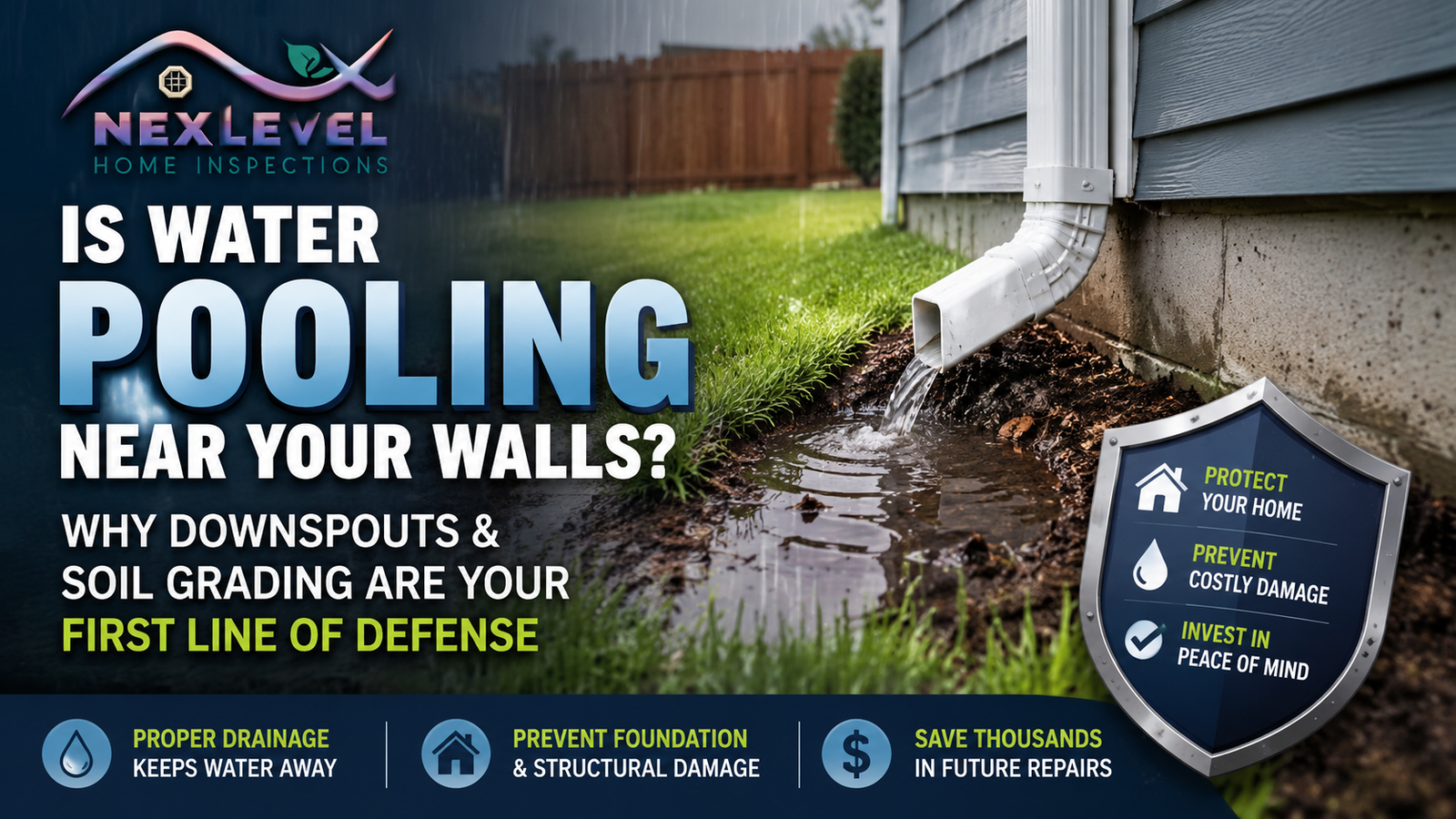
During heavy summer downpours or rapid spring snowmelts in Calgary, thousands of liters of water fall onto your roof deck. Where that water goes after leaving your roof shingles determines whether your basement stays bone-dry or turns into an expensive indoor swimming pool.
When water pools near your exterior foundation, it exerts immense hydrostatic pressure against concrete walls. Over time, that pressure pushes moisture through microscopic hairline cracks, joint seams, and window wells.
At NexLevel Home Inspections, founders Pritpal Singh and Navpreet Singh identify exterior drainage defects long before they cause internal structural damage or basement flooding. Here is why your downspouts and soil grading form your home’s most critical perimeter defense.
1. Understanding Positive vs. Negative Soil Grading
Soil grading refers to the direction of the ground slope immediately surrounding your home’s foundation.
-
Positive Grading (Safe): The ground slopes away from your foundation wall at a minimum drop of 6 inches over the first 10 feet. Rainwater naturally flows away toward swales, property lines, or municipal drainage channels.
-
Negative Grading (Dangerous): The ground slants downward towards the house. Soil settlement, landscaping modifications, and decaying garden beds are primary causes of negative slope.
When negative grading exists, bulk rainwater funnels straight down your foundation wall, saturating the backfill soil and overloading your sump pump system.
2. Downspout Discharge: The 6-Foot Golden Rule
Gutters collect roof runoff, but downspouts must direct that concentrated volume away from the building envelope. Discharging rainwater right at the corner of your home is like pouring a bucket of water directly onto your basement walls during every storm.
Pritpal and Navpreet inspect these downspout standards:
-
Extension Length: Downspout extensions should discharge at least 4 to 6 feet away from foundation walls.
-
Discharge Direction: Water must be directed away from neighboring structures, walkways, and driveways to prevent winter ice hazards and soil erosion.
-
Splash Blocks & Underground Drains: Ensures splash pads or rigid extensions remain clear of debris and soil blockage.
3. The Hidden Dangers of Foundation Water Pooling
Ignoring water pooling around exterior walls leads to severe secondary damage inside your home:
-
Hydrostatic Pressure & Efflorescence: Continuous water saturation forces moisture through porous concrete blocks or foundation cold joints, leaving white mineral deposits (efflorescence) on basement walls.
-
Window Well Flooding: Unprotected or clogged window wells trap standing water, causing basement window seals to leak.
-
Indoor Air Quality & Mold: Damp basements encourage rapid mold growth behind drywall framing. Discover how attic and basement inspections protect indoor air quality in dual-occupancy and single-family homes.
-
Roof Runoff Overload: Understand how catching water management flaws early fits into overall maintenance; see how a $500 inspection saves you $15,000 on a new roof.
4. Exterior Drainage Inspection Checklist
| Inspection Point | Standard Condition | Red Flag Indicator |
| Perimeter Grading | 6-inch drop over first 10 feet away | Soil sloping toward foundation, sunken flower beds |
| Downspout Extensions | Discharging 6+ feet away | Missing extensions, dumping at foundation wall |
| Eavestroughs & Gutters | Clean, properly sloped to outlets | Overflow marks, sagging gutters, heavy debris |
| Window Wells | Clean gravel, 4-inch clearance below window sill | Debris buildup, standing water, missing covers |
5. Catch Drainage Defects Before You Buy or Renovate
If you are currently evaluating a property, identifying poor grading gives you strong leverage during price negotiations. Learn how to use home inspection findings to negotiate like a pro before waiving purchase conditions.
Taking advantage of seasonal weather conditions helps expose hidden water management issues. Read how a smart buyer strategy catches hidden flaws early during warm weather inspections, and discover why booking your inspection early prevents last-minute panic.
Calgary Inspector Insight: “Over 80% of basement moisture problems we inspect in Calgary are directly caused by negative soil slope and short downspout extensions,” notes Navpreet Singh. “Fixing these two exterior items is the most cost-effective way to protect your foundation.”
Protect Your Foundation with NexLevel Inspections
Do not wait for a heavy storm to reveal foundation weaknesses. Let Pritpal Singh and Navpreet Singh perform a complete, data-driven inspection featuring thermal imaging to keep your basement dry and secure.
🏆 Partner with Calgary’s Premier Home Inspection Team
-
Book Online 24/7: www.nexlevelinspections.com
-
Call/Text Us Directly: (403) 633-6616 | (587) 830-0840











Leave a Reply