



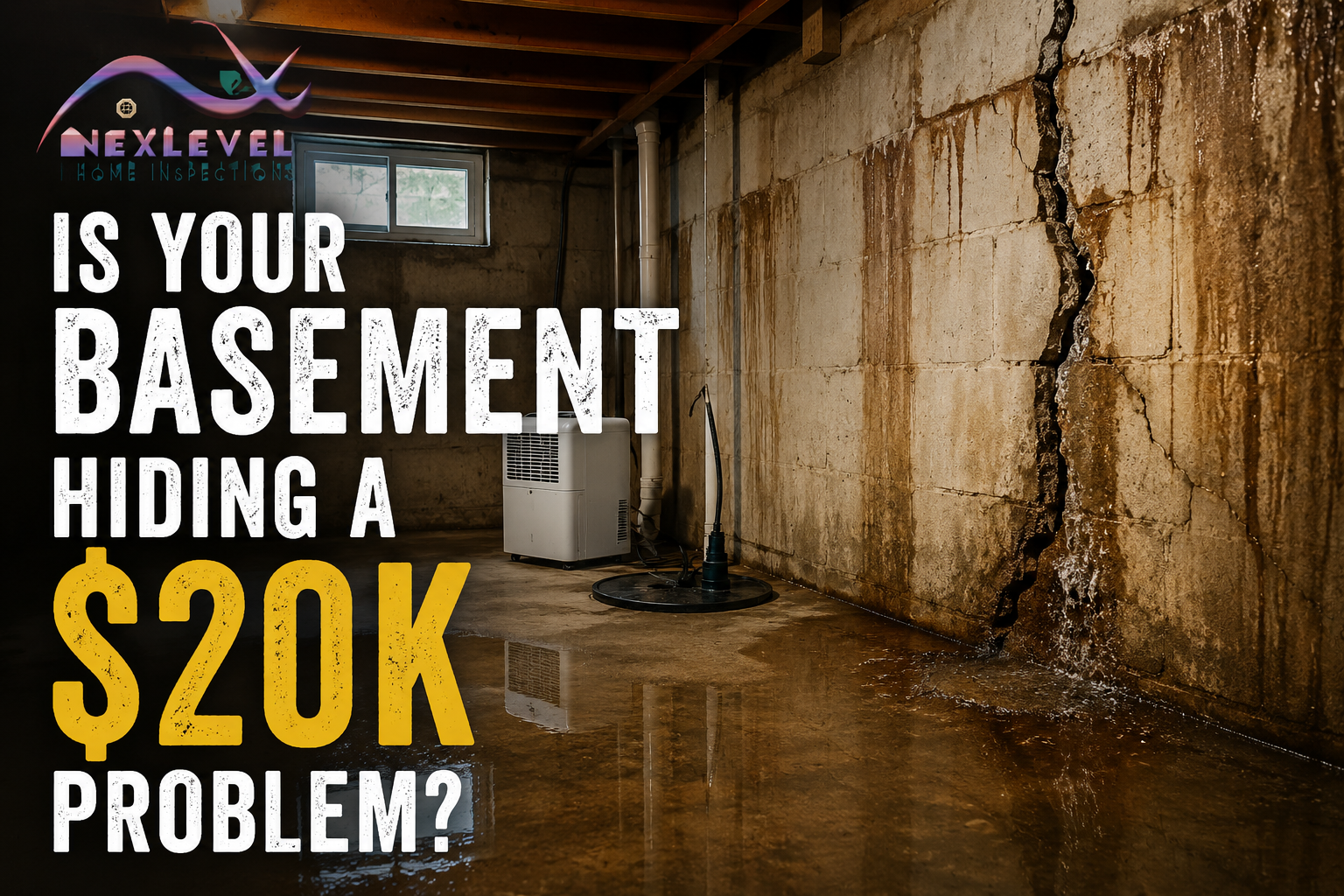
When walking through a prospective home or admiring a freshly renovated property in Calgary, a finished basement often feels like a premium selling point. The modern flooring, crisp pot lights, and cozy family space create an immediate impression of value.
However, beneath the surface, the lower level of your home faces constant exposure to hydrostatic groundwater pressure, shifting soil, and concealed plumbing systems. When minor defects go unnoticed, they don’t just cause minor inconvenience—they rapidly multiply into $10,000 to $25,000+ repair bills.
At NexLevel Home Inspections, inspectors Pritpal Singh, Navpreet Singh, and Jason regularly identify hidden sub-grade hazards before buyers sign off on final conditions. Here is how three common basement issues can balloon into $20K nightmares—and how to spot them early.
1. The $20,000 Breakdown: How Small Defects Stack Up
Severe basement expenses rarely happen all at once; they build up quietly behind finished surfaces until water breaks through or structural movement causes visible damage.
A. Structural Horizontal Cracks & Lateral Pressure ($12,000 – $20,000+)
Unlike minor vertical hairline shrinkage cracks, horizontal cracks or inward bowing walls indicate heavy lateral earth and water pressure pushing against your foundation. Fixing structural foundation movement requires major excavation, exterior waterproofing, and steel bracing or carbon-fiber reinforcement.
B. Concealed Poly-B Pipe Burst & Water Remediation ($10,000 – $18,000+)
Polybutylene (Poly-B) gray plastic piping was widely installed in homes built between 1985 and 1997. Over time, internal degradation leads to sudden pinhole leaks. A hidden burst behind basement drywall saturates insulation, destroys flooring, and triggers extensive tear-out costs. Read more about hidden electrical and plumbing risks in older homes.
C. Black Mold & Saturated Wall Cavities ($5,000 – $12,000+)
A slow foundation leak coupled with improper vapor barriers creates an ideal environment for toxic mold. Remediating widespread mold requires professional containment, hazardous material disposal, studs treatment, and complete drywall reconstruction. Discover why finished basements require expert inspection eyes.
2. High-Risk Basement Defect Comparison
| Hidden Defect | Primary Warning Signs | Estimated Remediation / Repair Cost |
| Horizontal Foundation Cracks | Inward wall bowing, stair-step cracks, sticky basement doors | $12,000 – $20,000+ (Bracing & excavation) |
| Aging Poly-B Plumbing | Gray plastic pipes near water heater, pressure drops | $8,000 – $15,000 (Whole-home repiping) |
| Hidden Mold & Damp Cavities | Earthy/musty odors, baseboard warping, thermal moisture spots | $5,000 – $12,000 (Containment & rebuild) |
| Failed Sump Pump System | Pit overflowing, non-functional float switch, missing check valve | $1,000 – $15,000+ (Pump replace vs. flood damage) |
3. How Non-Invasive Technology Catch Defects Early
You don’t need to tear open finished drywall to find out if a $20,000 problem is brewing. Certified home inspectors use specialized diagnostic gear to look through wall cavities and under floorboards:
-
Infrared Thermal Imaging: Detects minute surface temperature variations. Wet insulation, leaking pipes, and hidden foundation moisture register as cool thermal patterns.
-
Pinless Moisture Meters: Measures moisture content inside drywall and baseboards without leaving marks or holes.
-
A Complete Exterior-to-Interior Audit: Evaluates exterior soil grading and downspout distances to ensure rainwater isn’t funneling straight toward your foundation. Learn why downspouts and soil grading are your first line of defense.
4. Turn Inspection Findings into Financial Protection
Catching basement risks during your conditional period changes everything. Instead of inheriting an unexpected financial burden after closing day, high-resolution diagnostic data allows you to:
-
Request Seller Repairs or Credits: Hold sellers accountable for active leaks, structural repairs, or system updates before removing conditions. Learn how to use inspection findings to negotiate like a pro.
-
Verify Income Property Safety: If you are purchasing a property for rental income, ensure the lower level complies with safety standards before tenants move in. Review our legal and safe basement suite checklist.
-
Perform Complete Foundation Checks: Use our detailed basement inspection checklist from sump pumps to foundation cracks to track critical components.
Calgary Inspector Insight: “A $500 home inspection is the most effective insurance policy you can buy against a $20,000 basement surprise,” says Jason. “Our job is to uncover hidden moisture and structural movement so you can make informed decisions with total confidence.”
Inspect Your Foundation with NexLevel Confidence
Don’t let hidden basement defects turn your real estate investment into a costly financial liability. Let Pritpal Singh, Navpreet Singh, and Jason at NexLevel Home Inspections give you the thermal imaging-backed answers you need before you buy.
🏆 Partner with Calgary’s Premier Home Inspection Team
-
Book Online 24/7: www.nexlevelinspections.com
-
Call/Text Us Directly: (403) 633-6616 | (587) 830-0840









Leave a Reply