


Older Calgary neighborhoods like Mount Royal, Crescent Heights, Varsity, and Lakeview are filled with character, mature tree canopies, and spacious lots. However, beneath classic hardwood floors and vintage finishes, legacy electrical and plumbing infrastructure can hide massive financial liabilities.
Building codes and domestic materials have evolved dramatically over the decades. What was considered cutting-edge construction in 1920, 1970, or 1990 can present severe fire hazards, sudden water damage risks, or cause home insurance providers to deny coverage outright.
Before waiving your purchase conditions, review this breakdown from Pritpal Singh and Navpreet Singh at NexLevel Home Inspections on the critical hidden electrical and plumbing risks you must inspect.
1. Legacy Electrical Hazards: Outdated Wiring & Overloaded Panels
Modern households run high-draw appliances, air conditioners, home offices, and EV chargers. Outdated electrical systems were never engineered to carry these continuous electrical loads.
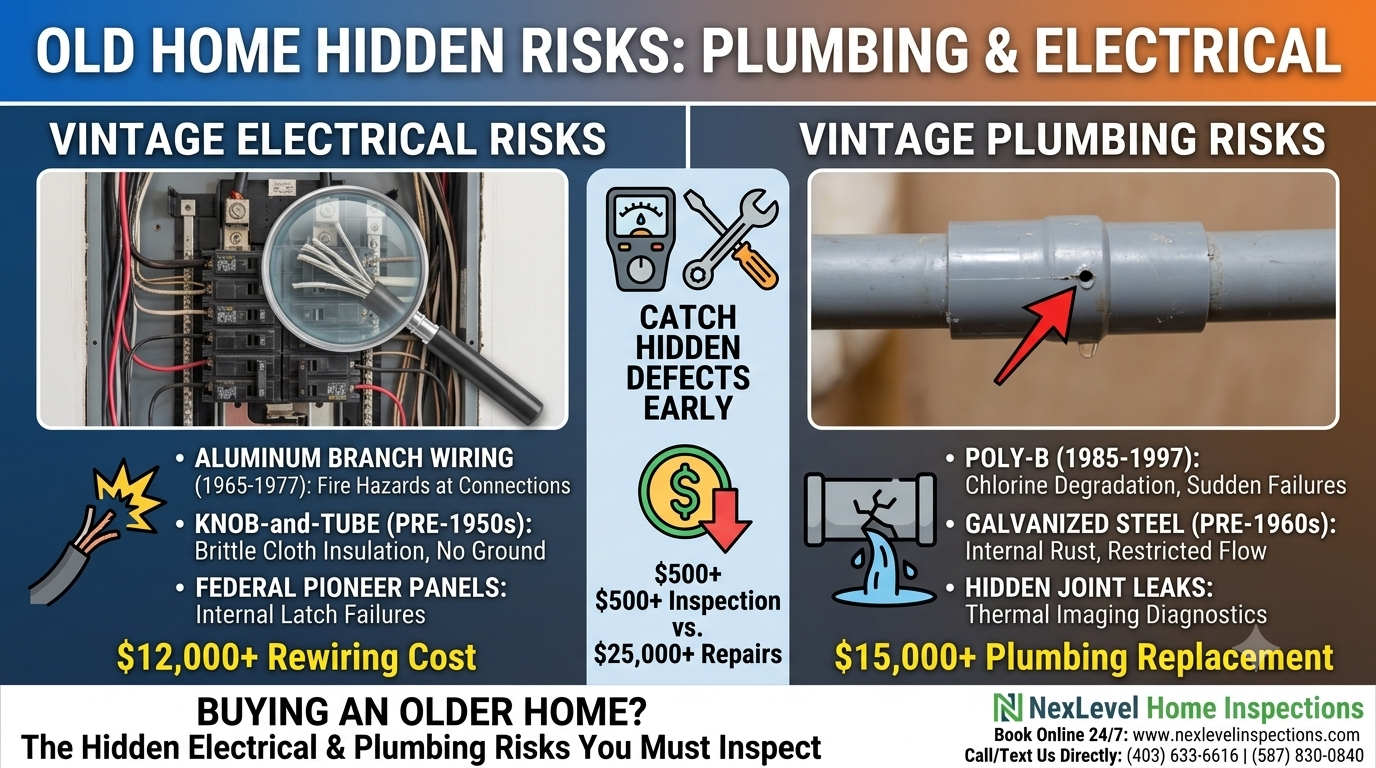
Knob-and-Tube (K&T) Wiring (Pre-1950s)
-
The Hazard: This open-air wiring system lacks a dedicated grounding wire (meaning no support for 3-prong outlets). Over decades, the cloth insulation becomes extremely brittle and flakes off, leaving exposed live copper conductors inside walls and ceiling spaces.
-
Insurance Reality: Most home insurers will not issue a policy on a home with active Knob-and-Tube wiring until it is fully replaced.
Single-Strand Aluminum Branch Wiring (Mid-1965 to Late-1970s)
-
The Hazard: During copper shortages in the 1960s and 1970s, single-strand aluminum branch wiring was widely installed. Aluminum expands and contracts much more than copper when under load, causing wire connections at outlets and switches to loosen, overheat, and create severe fire hazards.
-
The Fix: Remediating aluminum requires either full copper rewiring or “pigtailing” (joining copper leads to aluminum ends using approved AlumiConn/COPALUM connectors).
Obsolete Breaker Panels (e.g., Federal Pioneer / Federal Pacific)
-
The Hazard: Older breaker panels, such as older Federal Pioneer Stab-lok setups, frequently suffer internal latch failures. When an electrical short or circuit overload occurs, the breakers can fail to trip, melting wire insulation and sparking internal wall fires.
2. Concealed Plumbing Liabilities: Hidden Leaks and Structural Corrosion
Unlike a dripping kitchen faucet, internal pipe breakdown happens quietly behind drywall until a major rupture occurs.
Polybutylene (Poly-B) Piping (Mid-1980s to Late-1990s)
-
The Hazard: Poly-B is a flexible grey plastic pipe installed across thousands of Calgary homes built between 1985 and 1997. Chlorine and municipal water treatments cause Poly-B to degrade internally, leading to sudden pinhole leaks, brittle fractures, and catastrophic flooding.
-
Insurance Impact: Insurance providers across Alberta are placing water damage exclusions, high deductibles, or mandatory replacement deadlines on homes containing Poly-B plumbing.
Galvanized Steel Supply Lines (Pre-1960s)
-
The Hazard: Galvanized iron pipes rust from the inside out. Over time, mineral buildup restricts indoor water pressure to a trickle and leads to rust-colored water or hidden pinhole leaks near joints.
3. Quick Reference: Vintage Systems & Inspection Red Flags
| Material / System | Era Common | Key Risk Factor | Insurance Impact |
| Knob-and-Tube | Pre-1950s | No ground wire, brittle cloth insulation, fire risk | Very High (Coverage denied) |
| Aluminum Wiring | 1965–1977 | Loose connections at outlets, overheating | High (Requires inspection/pigtailing) |
| Poly-B Plumbing | 1985–1997 | Internal chlorine degradation, pinhole leaks | High (Surcharges or exclusions) |
| Galvanized Steel | Pre-1960s | Internal rust buildup, pressure loss, joint leaks | Moderate to High |
4. Protecting Your Purchase Strategy
Discovering vintage wiring or aging plumbing during a pre-purchase home inspection does not mean you have to walk away from a great home.
Having exact diagnostic data empowers you to handle the findings strategically:
-
Negotiate Price Adjustments: Use certified inspection findings to ask for price reductions or seller repair credits before closing day. Learn how to use home inspection findings to negotiate like a pro.
-
Catch Hidden Moisture Early: Thermal imaging technology pinpoints active Poly-B or galvanized pipe leaks behind finished drywall before mold forms. Read how attic and basement inspections protect indoor air quality.
-
Avoid Closing Surprises: Schedule your inspection early in your conditional period. Discover why booking your inspection early prevents last-minute panic.
Inspect Older Properties with NexLevel Confidence
Don’t let hidden electrical or plumbing defects turn your dream vintage home into a money pit. Let Pritpal Singh and Navpreet Singh deliver the clear, data-driven answers you need before you make your final decision.
🏆 Partner with Calgary’s Premier Home Inspection Team
-
Book Online 24/7: www.nexlevelinspections.com
-
Call/Text Us Directly: (403) 633-6616 | (587) 830-0840









Leave a Reply