




Freshly painted ceilings and spotless carpets make any house feel clean and welcoming. However, true household safety depends heavily on the invisible air your family breathes every single day. Unfortunately, trapped moisture inside dark roof cavities and behind finished walls creates an ideal breeding ground for toxic mold spores. Because your heating and cooling system circulates air throughout every bedroom, hidden moisture issues directly compromise your indoor air quality.
Thankfully, advanced diagnostic tools uncover these silent health hazards before you finalize your purchase. At NexLevel Home Inspections, certified experts Pritpal Singh and Navpreet Singh look far beyond surface cosmetics to safeguard Calgary households. Below, we explain how hidden mold and attic moisture develop and show how a professional evaluation protects your family’s health.
Many homeowners assume their attic stays completely isolated from their main living areas. In reality, residential buildings constantly pull air upward from the basement toward the roof through a natural physics process called the “stack effect.”
-
The Air Circulation Loop: When warm indoor air rises and escapes into a poorly sealed attic, outside air gets drawn into your lower levels to replace it. Furthermore, fluctuating wind pressures and HVAC fans frequently push stale, contaminated attic air back down through unsealed pot lights and ceiling hatches.
-
The Health Impact: Consequently, if your roof sheathing harbors active mildew or black mold, microscopic spores drift straight into your family’s bedrooms. To understand how upper and lower levels interact, read how attic and basement inspections protect indoor air quality.
2. How Calgary Weather Triggers Attic Moisture and Mold
Calgary’s dramatic winter temperature swings create severe condensation risks inside residential roofs. Initially, everyday activities like cooking and hot showers release gallons of warm humidity into your home.
-
The Frost and Melt Cycle: If bathroom exhaust fans terminate inside the attic instead of venting outdoors, that warm moisture freezes onto the cold wooden roof deck. Eventually, sudden Chinook winds melt the frost rapidly, soaking the wood and insulation in what locals call “attic rain.”
-
The Mold Explosion: Once the wooden sheathing becomes damp and warms up, dark fungal colonies spread across the framing within days. To prevent this, learn how to stop attic rain before it starts with a seasonal audit.
3. Spotting Hidden Dampness Behind Finished Walls
Mold rarely grows out in the open where buyers can spot it during a quick ten-minute tour. Instead, it thrives silently behind finished basement drywall, under kitchen sinks, and around poorly sealed window frames.
-
The Cosmetic Cover-Up: Often, sellers mask musty basement odors with scented candles or paint over minor water stains right before listing day. Yet, surface paint does nothing to stop active mold colonies growing on the back of the drywall.
-
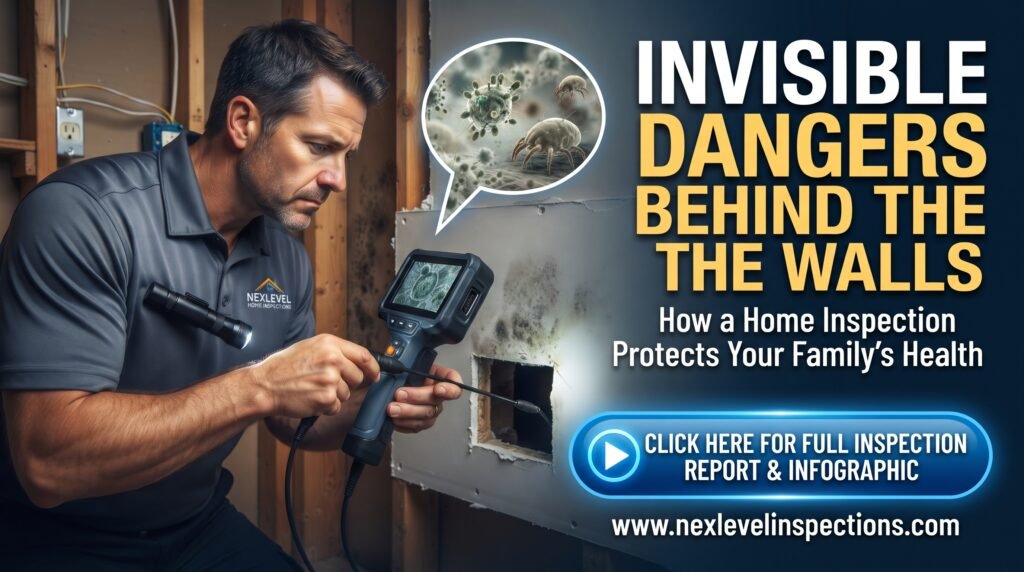
The Thermal Solution: By deploying high-resolution infrared thermal imaging cameras and calibrated moisture meters, our inspectors detect cold, wet patches behind finished walls without causing any damage. Discover why finished basements require expert inspection eyes before you sign closing papers.
4. Protecting Children and Sensitive Family Members
Poor indoor air quality affects everyone, yet young children, seniors, and individuals with asthma face the highest risks. Specifically, prolonged exposure to airborne mold spores triggers persistent coughing, sinus congestion, skin irritation, and unexplained fatigue.
-
The Early Warning: Therefore, verifying that a house is dry, properly ventilated, and free of fungal growth is just as critical as checking the roof or furnace. For a broader look at household safety hazards, read about invisible dangers behind the walls.
Moisture & Mold Diagnostic Breakdown
Breathe Easy Before You Buy
Never gamble with the air your family breathes every night. Undoubtedly, uncovering hidden attic moisture or behind-the-wall mold gives you the diagnostic proof needed to demand professional remediation or walk away safely. Whether you are purchasing a charming older home or a tightly sealed modern build, thorough moisture testing protects both your health and your wallet.
-
New Construction Risks: Always remember that modern airtight homes can trap indoor humidity easily if ventilation is unbalanced, so never assume a new build is perfect.
-
Full Scope: Also, review exactly what a full Calgary home inspection covers to see every system we evaluate.
Calgary Inspector Insight: “You can repaint a stained ceiling in an afternoon, but you cannot hide trapped moisture from a thermal camera,” notes Pritpal Singh. “When Navpreet and I inspect an attic and basement, we trace moisture right to its source so your family never moves into a home with hidden mold.”
Safeguard Your Family’s Air with NexLevel Precision
Ensure your next home is dry, healthy, and safe from top to bottom. Let Pritpal Singh and Navpreet Singh at NexLevel Home Inspections deliver the thermal diagnostic clarity you need to breathe easy.
🏆 Partner with Calgary’s Premier Home Inspection Team
-
Book Online 24/7: www.nexlevelinspections.com
-
Call/Text Us Directly: (403) 633-6616 | (587) 830-0840










Leave a Reply