

-
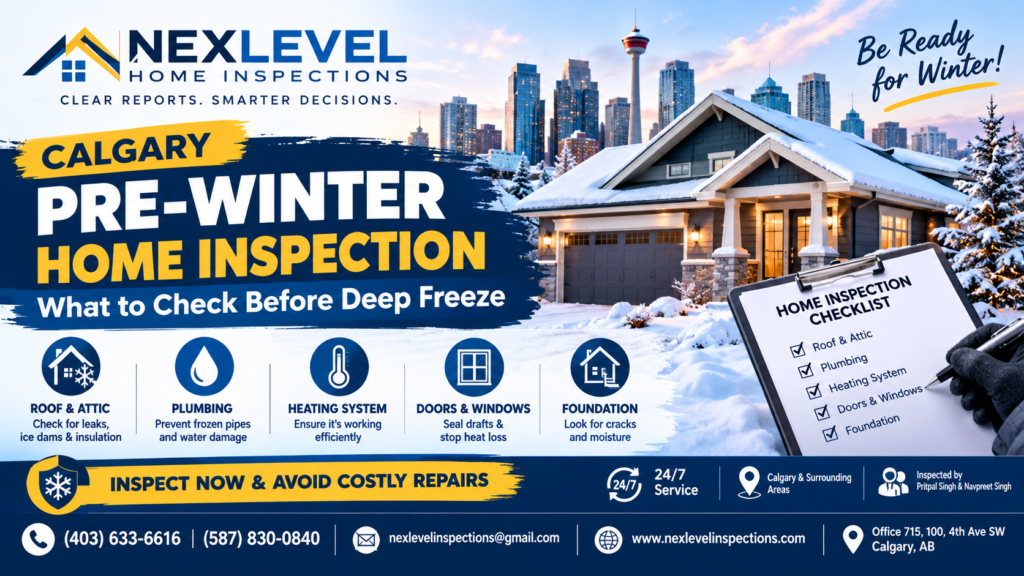
Winter in Calgary can put serious stress on your home. Temperatures can fall below -30°C. Chinook winds can then cause rapid melting. These sudden temperature changes can expose small problems in your home.
A small air leak can become a major heat-loss issue. A frozen pipe can also cause expensive water damage.
The good news is that many winter problems can be prevented. A few simple checks before the deep freeze can protect your heating system, plumbing, roof, and foundation.
At NexLevel Home Inspections, certified inspectors Pritpal Singh, Navpreet Singh, and Jason help Calgary homeowners prepare their properties for winter.
Here are nine important checks to complete before winter arrives.
1. Disconnect Garden Hoses and Drain Exterior Spigots
Water expands when it freezes. Trapped water inside an outdoor faucet can put pressure on the plumbing.
What to do:
- Disconnect every garden hose from your outdoor taps.
- Close the indoor shutoff valve for each exterior spigot.
- Open the small drain or bleeder cap on the shutoff valve.
- Allow any remaining water to drain from the line.
Never leave a hose connected during freezing weather. A connected hose can trap water inside the faucet and plumbing line.
2. Remove Flexible Sump Pump Extension Hoses
Many Calgary homes use flexible hoses to move sump pump water away from the property during warmer months.
These hoses can become a problem when temperatures drop.
Before winter:
- Remove flexible extension hoses from exterior sump pump outlets.
- Make sure the discharge point is clear.
- Test the sump pump and float switch.
- Check that water can leave the property without obstruction.
A frozen discharge hose can stop a sump pump from removing water. This can increase the risk of basement flooding and pump damage.
For more information, see our basement inspection checklist from sump pumps to foundation cracks.
3. Clear Eavestroughs and Extend Downspouts
Leaves, dirt, and roof debris can block your eavestroughs. Blocked gutters can hold water and ice during winter.
This can contribute to ice dams and water intrusion.
Check the following:
- Remove leaves and debris from the eavestroughs.
- Make sure water flows freely through the gutters.
- Check for loose or damaged sections.
- Keep downspout extensions clear.
- Direct water at least six feet away from the foundation when possible.
Good drainage helps keep melting snow away from your basement walls.
Learn more about why downspouts and soil grading are your first line of defense.
4. Weather-Strip the Attic Hatch and Check Exhaust Ducts
Warm indoor air can leak into a cold attic. Moisture from that air may freeze on the roof deck.
When temperatures change, the frozen moisture can melt. This problem is often called attic rain.
Inspect your attic before winter:
- Check the attic hatch for proper weather-stripping.
- Make sure the hatch has enough insulation.
- Check bathroom exhaust ducts.
- Confirm that exhaust ducts terminate outside.
- Make sure vents do not discharge into the attic.
Proper attic ventilation and air sealing can help reduce moisture, heat loss, and mold risk.
Read more about how attic and basement inspections protect indoor air quality.
5. Test Furnace Burners, Flame Sensors, and Airflow
A furnace failure during a Calgary cold snap can quickly become a serious problem.
Start with the furnace filter. A dirty filter can restrict airflow and make the system work harder.
Before winter, check:
- Replace a dirty furnace filter.
- Run the heating system through a complete cycle.
- Listen for unusual sounds.
- Check that the burners ignite properly.
- Make sure vents and registers are not blocked.
- Have a qualified technician inspect the system when needed.
The flame sensor should also be clean and working correctly. A faulty sensor can cause the furnace to shut down.
For a broader overview, read what a full Calgary home inspection covers.
6. Clean and Balance Your Heat Recovery Ventilator (HRV)
Modern Calgary homes are often built with tight building envelopes. This helps reduce heat loss, but good ventilation is still important.
An HRV helps bring in fresh air while recovering heat from outgoing air. It also helps control indoor humidity.
Before winter:
- Turn off the HRV.
- Remove and clean the core according to the manufacturer’s instructions.
- Clean the filters.
- Check the intake and exhaust vents outside.
- Remove leaves, snow, and other debris from the exterior hoods.
Good HRV maintenance can improve indoor air quality and reduce excess moisture.
7. Scan Exterior Walls with Infrared Thermal Cameras
Heat loss is not always visible. Missing insulation and air leaks can hide behind finished walls.
Thermal imaging can help identify temperature differences across the building envelope.
At NexLevel Home Inspections, thermal cameras can be used to check areas such as:
- Exterior walls
- Window frames
- Door areas
- Ceiling transitions
- Overhangs
- Other areas where heat loss may occur
Thermal imaging can help locate cold spots and possible insulation gaps without opening finished walls.
You can also learn why finished basements require expert inspection eyes.
8. Inspect Exterior Foundation Concrete for Cracks
Calgary homes can experience repeated freeze-thaw cycles. Changes in temperature can affect soil, concrete, and foundation walls.
Walk around the outside of your home and look for:
- New foundation cracks
- Cracks that appear to be getting larger
- Gaps around windows
- Water stains
- Damaged concrete
- Areas where soil slopes toward the foundation
Even a small opening can allow water to enter when snow melts.
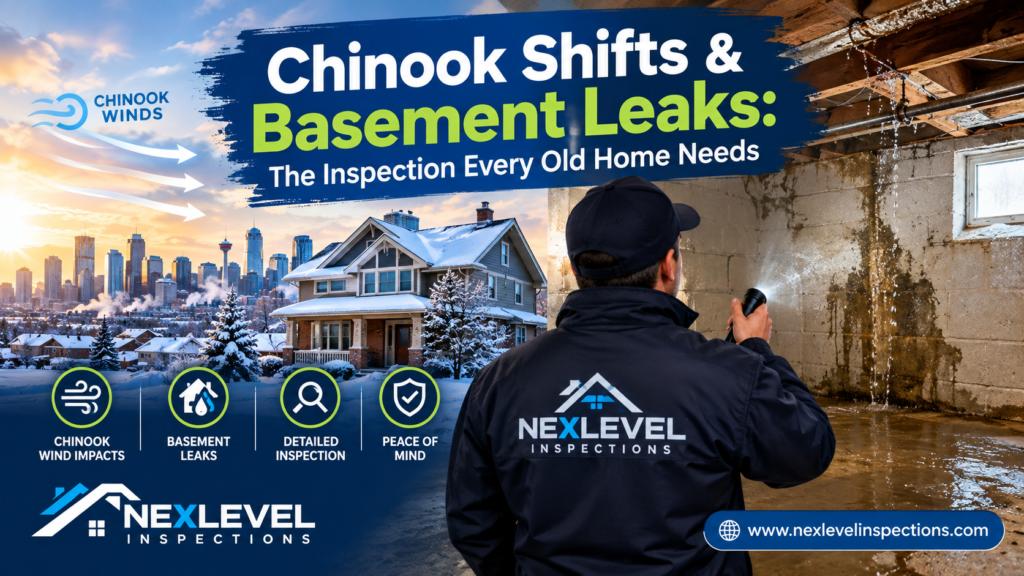
Learn more about Chinook shifts and basement leaks and how to avoid a hidden $20,000 basement disaster.
9. Test Life-Safety Alarms and Locate Main Shutoffs
Cold weather means windows stay closed more often. Proper ventilation and carbon monoxide protection are especially important during the heating season.
Test every smoke and carbon monoxide alarm in your home.
Also check:
- Replace batteries when needed.
- Confirm alarms are installed on every required level.
- Keep alarms free from dust.
- Make sure everyone knows the emergency exit plan.
- Locate the main water shutoff valve.
- Make sure the shutoff valve is easy to access.
Knowing where the main water shutoff is located can save valuable time if a pipe freezes and bursts.
Winterization Checklist: Priority and Inspection Tools
Maintenance Area Risk Prevented Recommended Check Exterior Spigots Frozen or burst plumbing Visual inspection and valve drainage Sump Pump Line Pump failure and basement flooding Hose removal and pump test Attic Space Attic rain and mold growth Air sealing and ventilation check Wall Envelope Heat loss and cold drafts Infrared thermal imaging Furnace & Ducts Heating failure and airflow problems Filter, airflow, and system check Gutters & Grading Ice dams and foundation water Gutter and downspout inspection Why a Pre-Winter Inspection Is Worth It
Winter preparation is important for both older homes and new construction.
Older homes may have hidden electrical, plumbing, insulation, or foundation problems. New homes can also have air-sealing and building-envelope issues.
Consider these additional resources:
- Buying an Older Home? Read about hidden electrical and plumbing risks in older homes.
- Moving Into a New Build? Learn why you should never assume a new build is perfect.
- Planning Your Budget? Find out how much a Calgary home inspection costs.
Calgary Inspector Insight: “A single burst hose bib or frozen sump line can cause thousands of dollars in water damage overnight,” says Pritpal Singh. “A pre-winter inspection can help identify problems before freezing temperatures arrive.”
Protect Your Home Before the Deep Freeze
Calgary winters can be hard on homes. Preparing early gives you time to fix small problems before they become expensive repairs.
NexLevel Home Inspections can help you identify potential issues with your home’s structure, heating system, attic, foundation, drainage, and building envelope.
Whether you own an older Calgary home or a newer property, a professional inspection can give you greater confidence before winter arrives.
🏆 Partner with Calgary’s Premier Home Inspection Team
- Book Online 24/7: www.nexlevelinspections.com
- Call/Text: (403) 633-6616
- Call/Text: (587) 830-0840
NexLevel Home Inspections
Calgary, Alberta
Professional Home Inspections | Thermal Imaging | Building Envelope Checks
Winterize Your Calgary Home: 9 Critical Inspection Checks

07
Oct










Leave a Reply