



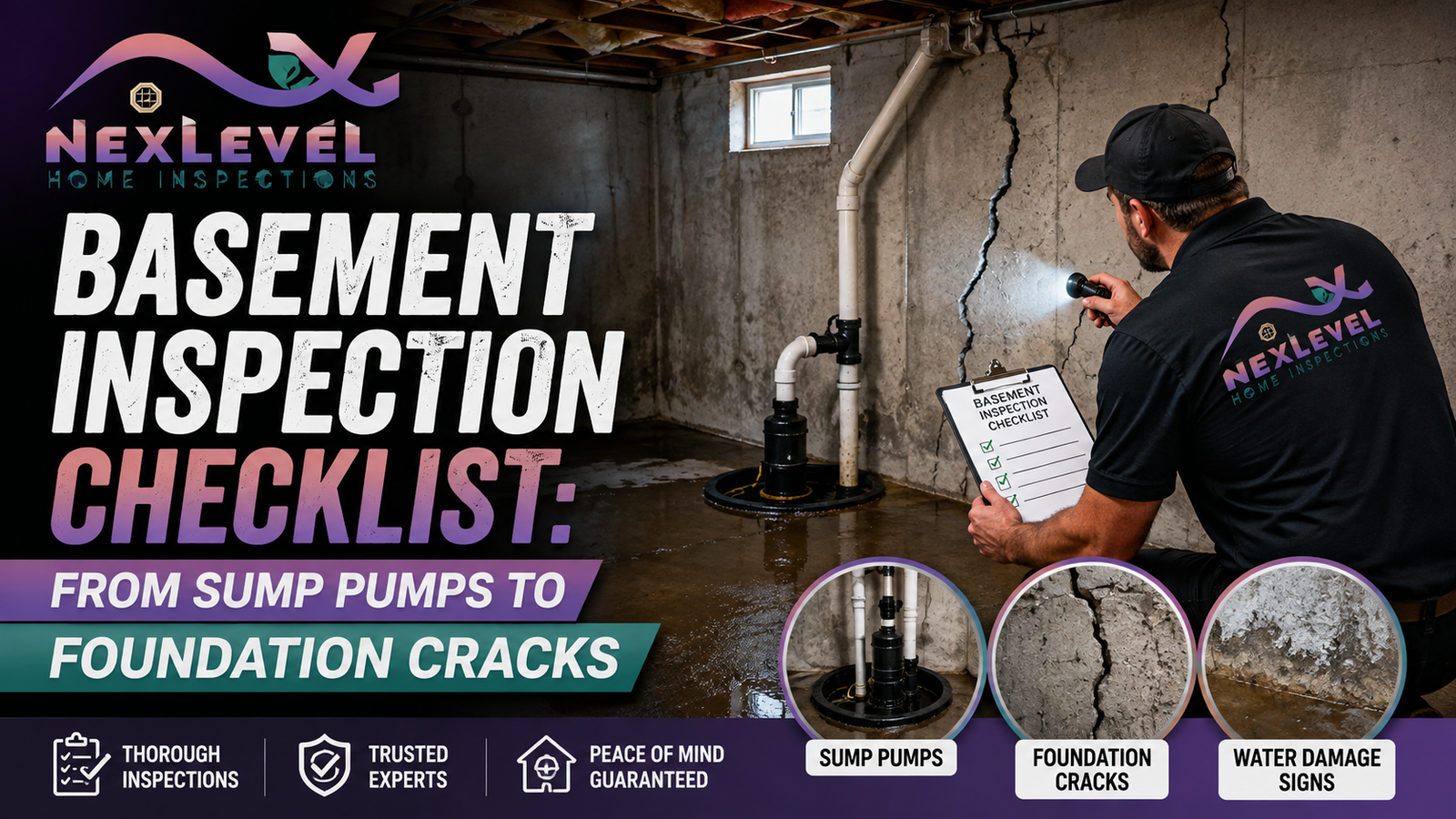
Your home’s foundation and lower level bear the structural weight of the entire building while standing off against hydrostatic groundwater pressure, soil expansion, and freezing Calgary winter conditions. Whether a basement is completely unfinished or beautifully completed, it requires a rigorous, methodical inspection long before you sign off on final purchase conditions.
At NexLevel Home Inspections, founders Pritpal Singh and Navpreet Singh, along with certified inspector Jason, treat the basement as the heart of your home’s structural health.
Use this step-by-step checklist to understand what a comprehensive basement evaluation covers—from sump pump reliability to foundation crack classifications.
1. Foundation Wall Integrity: Evaluating Cracks & Movement
Not all concrete cracks mean structural disaster, but knowing the difference between minor settlement lines and active structural failures is vital.
-
Vertical Shrinkage Cracks: Common in poured concrete foundations as water evaporates during curing. Minor vertical hairline cracks (under $1/8\text{ inch}$ wide) are typically sealed against water intrusion without requiring structural reinforcement.
-
Horizontal & Stair-Step Cracks: Red Flag. Horizontal cracking along middle wall heights indicates severe soil expansion or lateral pressure pushing against the foundation. Stair-step cracks in concrete block walls signal uneven footings or severe structural settlement.
-
Efflorescence & Mineral Staining: White, powdery mineral deposits on concrete walls indicate active or historic groundwater seepage.
2. The Sump Pump System: Your Flood Defense Mechanism
A failed sump pump during a severe thunderstorm or rapid spring thaw can flood a basement in hours. Testing the sump pit and mechanical system is a top priority during an inspection.
Pritpal, Navpreet, and Jason verify key sump pit components:
-
Float Switch & Mechanical Trigger: Manually lifting the float switch ensures the motor runs cleanly and discharges water away from the building.
-
Check Valve Function: Verifies a functional check valve is installed on the discharge pipe to prevent pumped water from flowing back into the pit.
-
Discharge Location: Checks that exterior discharge pipes push water at least 6 feet away from exterior walls onto splash pads. See why downspouts and soil grading are your first line of defense against foundation water overload.
-
Battery Backup Support: Recommends secondary battery-operated backup pumps for uninterrupted protection during power outages.
3. Floor Drains, Mechanical Clearance & Air Quality
Basement mechanical rooms house critical utility equipment that directly impacts indoor comfort and health.
-
Main Floor Drain: Ensures floor drains remain unobstructed, trap seals hold water to block sewer gases, and floor surfaces slope toward the drain.
-
HVAC & Water Tank Setup: Inspects furnace filters, duct connections, and gas ventilation stacks. Read how attic and basement inspections protect indoor air quality throughout living zones.
-
Thermal Imaging Moisture Scans: Advanced thermal imaging camera checks expose hidden moisture trapped behind finished drywall and beneath subflooring before mold develops. Learn why finished basements require expert inspection eyes.
4. Comprehensive Basement Inspection Checklist
| Inspection Zone | Visual Evaluation | Technical & Functional Test |
| Concrete Walls | Checks for horizontal bowing, vertical cracks, and efflorescence | Infrared thermal check for active wall moisture |
| Sump Pit & Pump | Checks pit cleanliness, lid seals, and discharge pipe connections | Float switch activation and backflow valve test |
| Floor & Drainage | Inspects floor sloped toward drain, basement floor cracks | Water level and trap seal check in floor drain |
| Basement Bedrooms | Verifies emergency egress window clearances and well depth | Opening mechanism check without tools |
| Plumbing Lines | Checks for Poly-B grey plastic or aging galvanized supply lines | Pressure drop and corrosion spot verification |
5. Smart Protection for Real Estate Buyers & Investors
Evaluating a basement thoroughly gives you immense leverage during real estate transactions.
-
Secondary Suite Safety: If you are buying an income property, ensure compliance before renting out the lower level. Review our complete guide on whether that basement suite is legal and safe.
-
Older Home Risks: Catch aging plumbing and legacy wiring before writing off conditions. Read about hidden electrical and plumbing risks in older homes.
-
Negotiate Repairs Like a Pro: Use exact diagnostic findings to ask for price reductions or repair escrows. Discover how to use home inspection findings to negotiate like a pro.
Calgary Inspector Insight: “Checking a basement isn’t just about looking at concrete walls,” notes Jason. “It’s about verifying that sump systems, drainage slopes, and thermal scans all prove the foundation is bone-dry and structurally sound.”
Inspect Your Foundation with NexLevel Confidence
Don’t buy a home with hidden foundation or water drainage risks. Let Pritpal Singh, Navpreet Singh, and Jason at NexLevel Home Inspections provide the clear, thermal imaging-backed analysis you need to move forward with total peace of mind.
🏆 Partner with Calgary’s Premier Home Inspection Team
-
Book Online 24/7: www.nexlevelinspections.com
-
Call/Text Us Directly: (403) 633-6616 | (587) 830-0840










Leave a Reply